
In this article
There is no "best guard dog" — there is the best one for your home, your routine and your experience. A Malinois in a sedentary family is a disaster; a mastiff in an apartment is too. Below are the seven breeds most sought after for protection, compared honestly by people who breed one of them.
Bias disclosure, since it exists: we breed Dobermans. That is why the Doberman appears here with its flaws spelled out — and the other six with their strengths.
What makes a good guard dog (and what does not)
The costliest confusion on this subject is thinking guarding means aggression. It does not. An aggressive dog bites the mailman, the nephew and the vet — that is legal liability, not security. What you want is stability: notice early, warn loudly, act only when needed, and switch off when the owner signals.
Three ingredients: threshold (what it takes to trigger a reaction), control (stopping on command) and bond (protecting because the family is his, not by reflex).
The seven, side by side
| Breed | Male size | Energy | Guarding style | Best for |
|---|---|---|---|---|
| Doberman | 30–40 kg | High | Alarm and interception | Active family, present owner |
| Rottweiler | 45–60 kg | Medium | Deterrence by presence | Space, firm handler |
| German Shepherd | 30–40 kg | High | Versatile, trainable | Owners who really train |
| Belgian Malinois | 25–30 kg | Very high | Pure work | Professionals, dog sport |
| Cane Corso | 45–50 kg | Medium-low | Territorial, imposing | Large property, experienced owner |
| Boerboel / mastiff types | 50–70 kg | Low | Suspicion of strangers | Rural, few visitors |
| Boxer | 30–32 kg | High | Alarm, friendly presence | Families with children |
Arraste a tabela para o lado para ver todas as colunas.
One by one, without the sales pitch
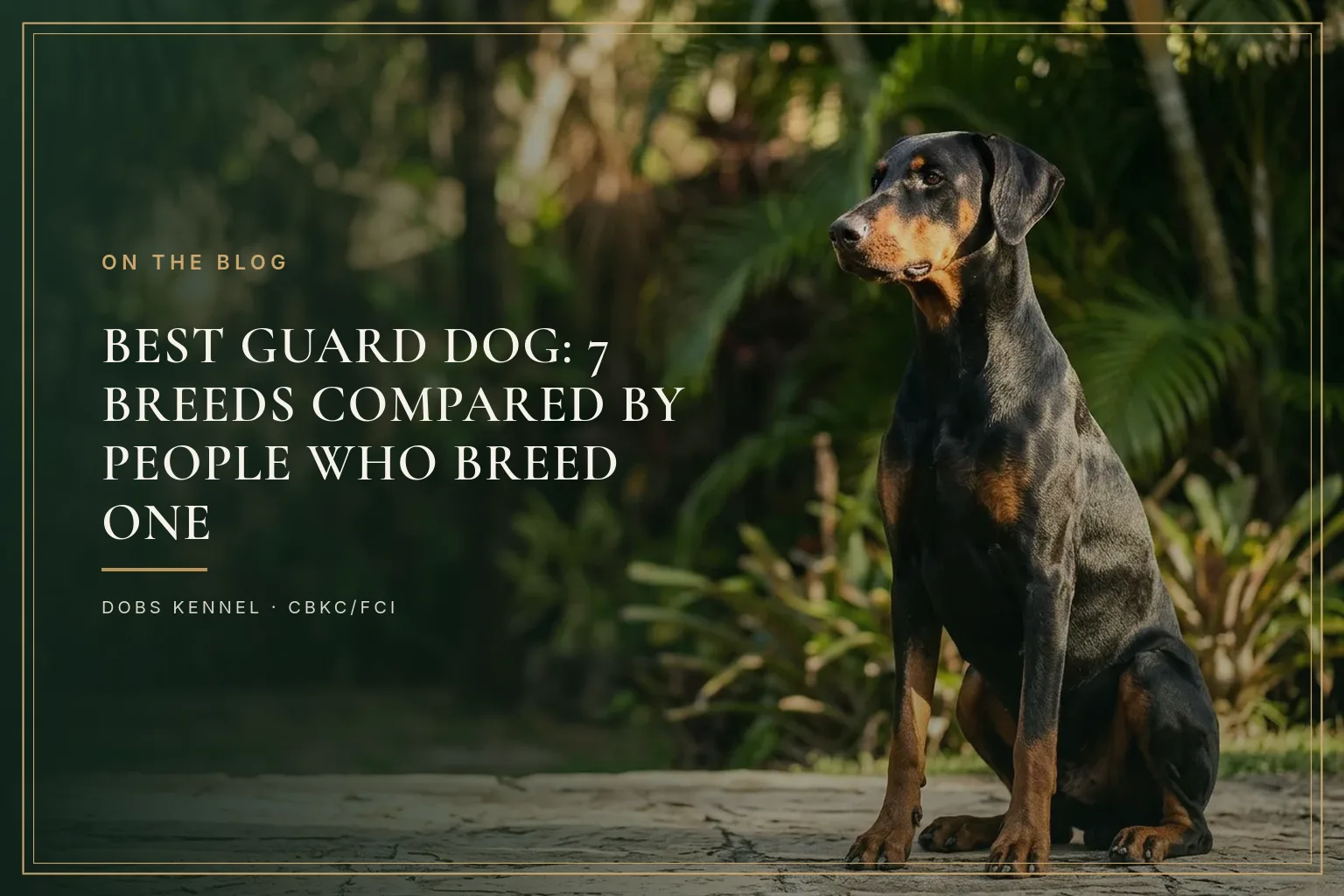
Doberman
For: speed, top-tier intelligence, intense attachment — the "velcro dog". Guards on the move: it goes out with the family, it does not just watch a gate.
Against: needs 60–90 minutes of daily exercise or it invents a job. Suffers when left alone. Dilated cardiomyopathy is a serious health point — buying from untested parents is gambling.
Rottweiler
For: presence that settles matters before they happen. Calmer indoors, forgives a lazy Sunday.
Against: 60 kilos without leash training drags you. Dysplasia and certain cancers weigh in, and lifespan is shorter at 8–10 years.
German Shepherd
For: the most versatile of all and probably the easiest to train — protection, scent work, assistance, sport.
Against: sheds year-round, and bloodline matters more here than anywhere: show and working lines are almost two different dogs.
Belgian Malinois
For: the special-forces dog, and rightly so — stamina, focus and drive nothing else matches.
Against: the wrong answer for 95% of families. Without daily work at sport level it becomes anxious and destructive. Do not buy one because of a YouTube video.
Cane Corso
For: imposing without needing to prove it, calmer than its size suggests, strong territorial bond.
Against: that mass demands an experienced handler and heavy socialization from puppyhood. High upkeep cost.
Boerboel and mastiff types
For: suspicion of strangers is in the standard; few match them on isolated rural property.
Against: that same trait makes them hard in a home with visitors and deliveries.
Boxer
For: the most playful on the list, excellent with children, an outstanding alarm.
Against: guards more in the warning than in the action. The short muzzle suffers in heat.
The questions that decide for you
- How much daily exercise can you guarantee on bad days? Under 40 minutes rules out Doberman, German Shepherd and Malinois.
- Do you host visitors often? If so, mastiff guardian types drop off the list.
- Apartment or house with a yard? An apartment with real daily exercise suits a Doberman or a Boxer; a Cane Corso, no.
- Small children at home? All can live well with early socialization, but size matters: 60 kilos knock a child over without meaning to.
- Is this your first guard dog? If so, Malinois and mastiff guardians are out.
Frequently asked questions
Does a guard dog need professional training?
Basic obedience, yes, all of them. Protection training, almost no ordinary owner needs — and done badly it produces a dangerous dog, not a safe one.
Do females guard less than males?
No. Females tend to be more family-focused and slightly easier to handle; the size difference is real, the drive difference is not.

Written by
Marcelo Vaz — breeder at Dobs Kennel
CBKC/FCI registered kennel in Natal, Brazil. Champion American and European bloodlines, proven health, and lifelong support for every family. Meet the kennel →