
In this article
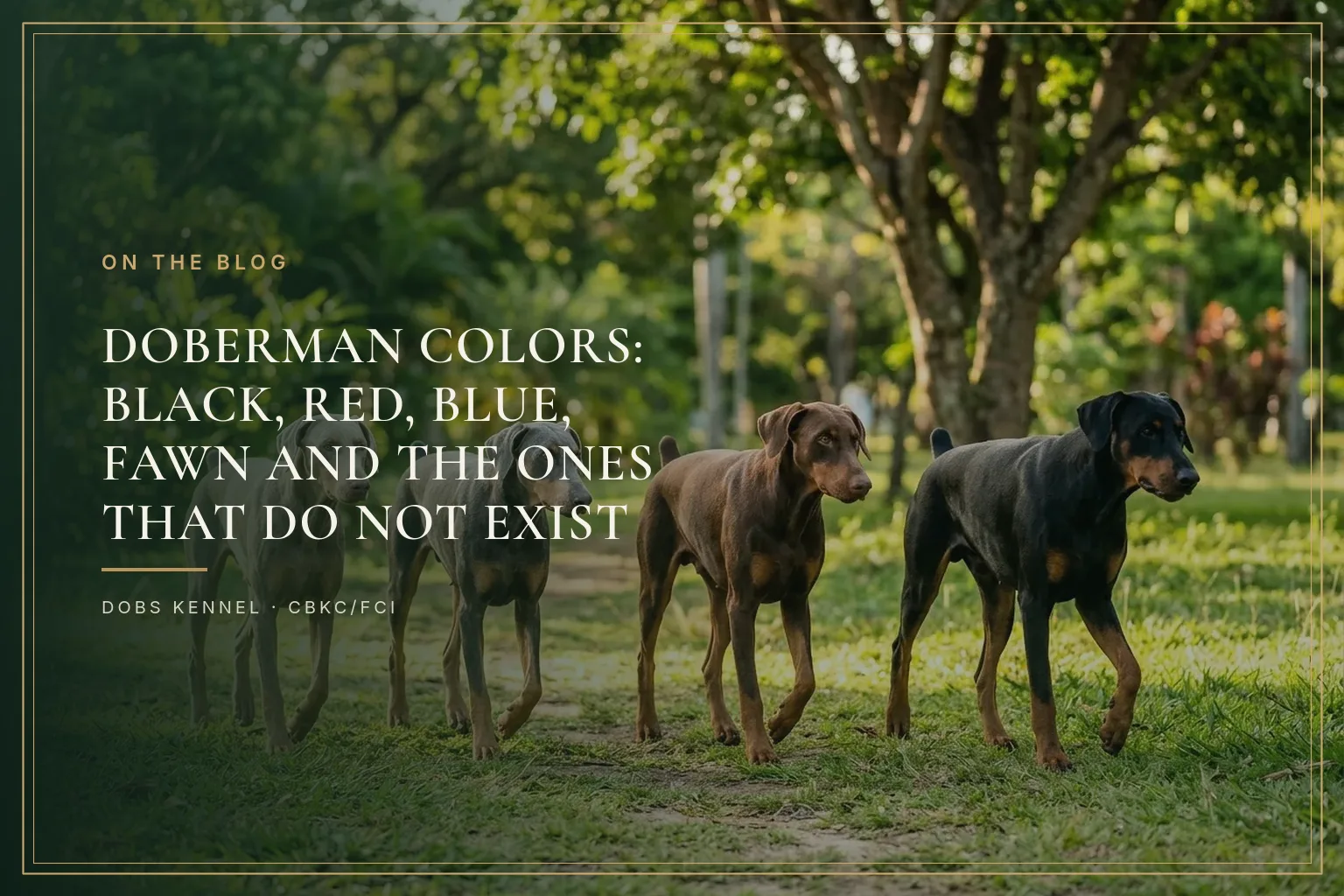
The Doberman comes in four recognized colors: black, red (brown), blue and fawn (Isabella), always with rust markings. The "white Doberman" is not a color of the breed but a genetic condition with documented health problems, and responsible breeders do not reproduce it. This guide covers each color, the genetics behind them and what actually changes in practice, including price and health.
The four recognized colors
- Black and rust: the classic image of the breed, most common in litters and in the show ring.
- Red and rust (brown): deep chocolate, the coat that shifts most with the light. Second most common.
- Blue and rust: not truly blue, but diluted black, a steel grey. Rare.
- Fawn (Isabella) and rust: diluted red, a greyish beige. The rarest of the four.
The rust markings, over the eyes, on muzzle, chest and legs, appear in all four. A solid-colored Doberman without markings is outside the standard.
The genetics, in plain language
Two switches control everything. The first decides the base pigment: black or red. The second, the dilution gene, decides whether that pigment shows full or washed out. Diluted black gives blue; diluted red gives fawn.
Dilution is recessive: a puppy is only born blue or fawn if it inherits the dilution key from both parents. That is why two black lines can produce a surprise blue puppy: both parents carried the hidden key. Not a defect, not mixed blood, just breed genetics at work.
Does color change temperament? No.
There is no evidence that color alters temperament, intelligence or guarding aptitude. A red Doberman is not "softer", a blue one is not "calmer". Temperament comes from bloodline and raising. If a seller uses color as a personality argument, choose another seller.
What color really changes: the skin
The dilute colors, blue and fawn, carry a high risk of Color Dilution Alopecia (CDA): hairs weaken and fall out, usually starting in the first years, leaving patches that do not grow back. Most blues are estimated to develop some degree of it, and the fraction is even higher in fawns.
CDA does not shorten a dog's life, and a blue Doberman can live happily with skin management. But that is why we do not breed for rare colors: deliberately selecting for dilution means choosing looks while knowing the dermatological risk. Our litters are black and red; if a blue is ever born from hidden genetics, the owner leaves here knowing what to monitor.
The "white Doberman": the talk ads never give you
In 1976 a cream, blue-eyed female was born in the United States, and the entire "white" population descends from her through heavy inbreeding. It is tyrosinase-positive albinism: nearly absent pigment, light eyes, pink skin. Documented problems: photosensitivity (strong sun hurts eyes and skin), higher skin tumor risk and, in part of the cases, vision problems. Breed clubs worldwide discourage or block breeding these lines; a "rare white Doberman" ad is a red flag, not a valuable rarity.
Color and price: how to read ads
Between black and red from tested parents there should be no relevant price difference. Distrust both extremes: a premium "because it is blue/fawn" (charging extra precisely for the color with skin risk) and a discount too deep on any color (the savings are usually the missing health tests).
Frequently asked questions
Is there an all-black Doberman?
The melanistic, without rust markings, occurs rarely, but is outside the standard. Such ads deserve the usual questions: pedigree and health tests.
Which color is rarest?
Fawn, then blue. Rarity here is not value: it is dilution, with the skin risk described above.
Can a puppy's color change?
The shade adjusts a little as the puppy coat sheds, and red varies with light, but black does not become red. The color it is born with is the color it keeps.

Written by
Marcelo Vaz — breeder at Dobs Kennel
CBKC/FCI registered kennel in Natal, Brazil. Champion American and European bloodlines, proven health, and lifelong support for every family. Meet the kennel →