
In this article
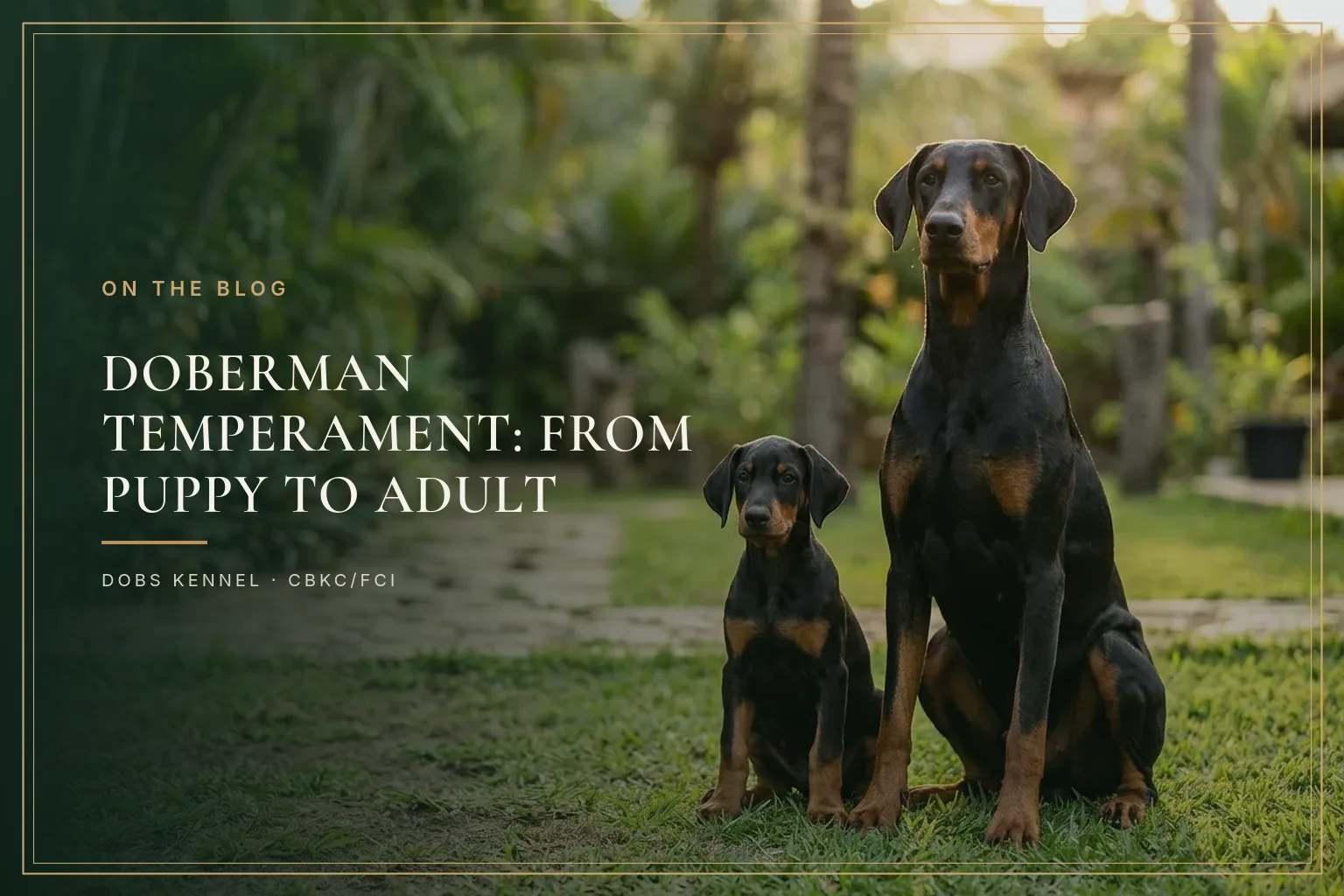
The composed adult Doberman standing quietly beside its owner was built between week eight and the second birthday. None of it happens on its own. Here is what to expect at each stage, what belongs to the breed and what belongs to raising.
An honest portrait
- Velcro dog. The Doberman is the most attached breed we have raised. If the family is in the living room, so is the dog. Anyone looking for an independent dog will be disappointed.
- Room reading. He notices a change in your tone, tension in your body and an unexpected visitor before you do. That is the foundation of guarding, and also why he mirrors your stress.
- Sensitivity. Harsh methods do not make a Doberman obey. They make him distrust. The breed learns fast with clarity and consistency, and shuts down with shouting.
From puppy to adult, stage by stage
| Stage | What you see | What to do |
|---|---|---|
| 8 to 16 weeks | Curious, fearless, mouthing everything | Introduce the world: sounds, surfaces, all kinds of people. The most valuable window of his life |
| 4 to 8 months | Tests limits, forgets known commands, grows faster than coordination | Keep the rules identical every day. This is not rebellion, it is a brain rewiring |
| 8 to 14 months | The first genuine alert barks appear | Acknowledge the warning and call it off. He must learn that you decide what counts as a threat |
| 14 to 24 months | The adult settles: less impulse, more judgement | Consolidation. The dog you shaped is the dog you keep |
Arraste a tabela para o lado para ver todas as colunas.
The decisive stage happens inside the kennel, before you collect the puppy. We covered it in Socialisation in the first 12 weeks.
Male or female
Generalisations always have exceptions, but the pattern we see litter after litter is this: females mature earlier and tend to be more reserved with strangers, while males take longer to settle and are more openly affectionate. Both guard well. The difference is in the pace of maturing, not in courage.
With children, visitors and other dogs
With the family's own children the Doberman is usually tolerant to a degree other breeds are not. The real risk is not biting, it is being knocked over by thirty-five kilos turning around in a small room.
With visitors, expect a dog that places himself between you and the door, assesses, and relaxes when you relax. A dog that never relaxes was under-socialised, not over-endowed with instinct.
What ruins a good temperament
- Isolation in the yard. The most common and most expensive mistake.
- No mental work. Walking tires the body. The brain needs commands, rule-based play and scent work.
- Rules that change. Consistency matters more than strictness.
- Physical punishment. It breaks exactly the trust that holds the dog together in difficult moments.
Frequently asked questions
At what age does guarding start?
The first warnings appear around eight months, but mature judgement only arrives near the second year. Before that it is a large puppy imitating an adult.
Does a Doberman pick one person?
He obeys best whoever sets the rules and spends the most time with him, but the bond is with the whole family.
Every puppy leaves us with the first twelve weeks properly worked and a written report of the temperament we observed. Message us on WhatsApp to talk about which puppy fits your routine.

Written by
Marcelo Vaz — breeder at Dobs Kennel
CBKC/FCI registered kennel in Natal, Brazil. Champion American and European bloodlines, proven health, and lifelong support for every family. Meet the kennel →