


In this article
- Where the idea of a miniature Doberman came from
- Doberman and Miniature Pinscher side by side
- Two standards, two numbers: what is written on paper
- What you're sold when they advertise a "mini Doberman"
- What varies in size within the standard
- "But I wanted a smaller Doberman, now what?"
- How not to fall for a fantasy ad
- The real Doberman is here
Straight to the point: a miniature Doberman does not exist. It doesn't exist in the FCI standard, it doesn't exist in a serious kennel, it doesn't exist anywhere in the world as a recognized breed or variety. Behind the term there is an honest misunderstanding on one side and, on the other, people using that misunderstanding to sell.
Where the idea of a miniature Doberman came from
The confusion has a name and a surname: the Miniature Pinscher. It's an elegant German dog, with a black and rust or brown coat, and a silhouette that recalls a shrunken Doberman. The resemblance is so strong that many people call it a "mini Doberman" in everyday talk.
But they are different breeds, with different histories. The Miniature Pinscher is centuries older than the Doberman and is not a reduced version of it. The similar look is a family resemblance: both come from the same trunk of German farm dogs, but one was selected to hunt rodents in stables and the other, created by Karl Friedrich Louis Dobermann at the end of the 19th century, for personal protection.
The German name of the Miniature Pinscher helps explain the misunderstanding: Zwergpinscher, which means dwarf pinscher. They are separate standards, with purposes that never crossed.
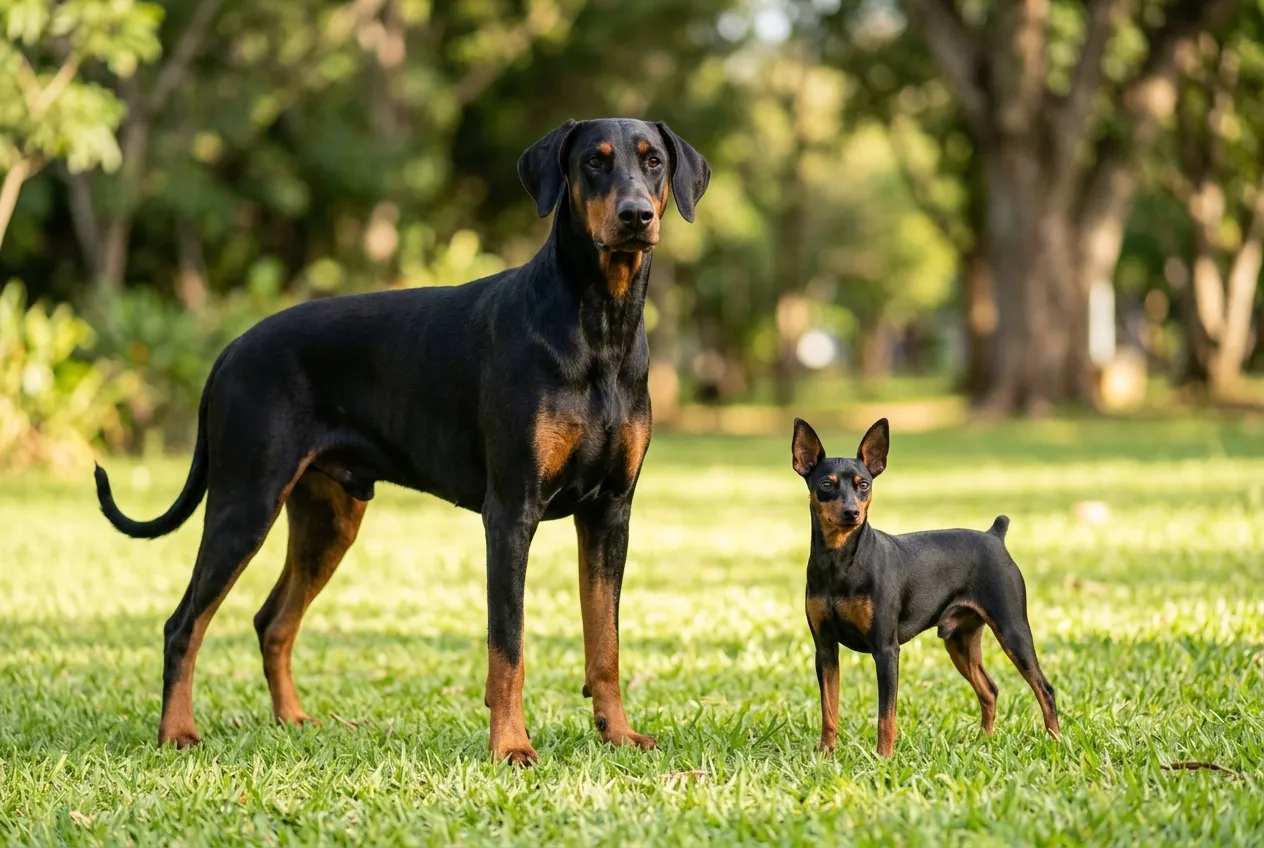
Doberman and Miniature Pinscher side by side
| Characteristic | Doberman | Miniature Pinscher |
|---|---|---|
| Height (FCI standard) | 68 to 72 cm (males), 63 to 68 cm (females) | 25 to 30 cm |
| Adult weight | 40 to 45 kg (males), 32 to 35 kg (females) | 4 to 6 kg |
| Original function | Personal protection and work | Hunting rodents in stables |
| Breed tendency | Vigilant, bonded to the family, needs handling | Alert, vocal, big energy in a small body |
| Real guarding | Yes, with structure and management | Warns by barking, but lacks the size to restrain anyone |
Swipe the table sideways to see all the columns.
Notice the size of the difference: a male Doberman weighs the same as eight or nine Miniature Pinschers. It's not a smaller version. It's another dog.
Two standards, two numbers: what is written on paper
The FCI, the international federation that the CBKC follows here in Brazil, gives a number to each recognized breed. The Doberman is standard No. 143. The Miniature Pinscher is standard No. 185. They are two separate documents, each with its own height range, its own weight and its own description of function. In neither of them does the word "miniature" appear attached to the Doberman, because that variety was never created or recognized by any registry.
There is a detail on the paper worth keeping for when you check. On the official pedigree the breed is written "Dobermann", with two n's, after the German breeder's surname. If the document they show you says "Miniature Pinscher", that is what you will take home, however much the ad promises something else. What the registry guarantees and what it doesn't is detailed in CBKC pedigree.
What you're sold when they advertise a "mini Doberman"
When the ad says "miniature Doberman", you will receive one of these three things:
- A Miniature Pinscher sold under the wrong name. It's a great companion dog, but if you wanted a Doberman, you'll notice the difference in the first year.
- An off-standard puppy: the smallest of the litter, an undernourished or dwarfed dog being advertised as "exclusive". A puppy too small for the breed raises a health flag, and the label of rarity doesn't change that.
- A classic scam: nice photo, a story of "rare imported lineage", a request for a deposit by Pix and the puppy never arrives. The "mini" attracts precisely whoever doesn't yet know the breed.
It's worth taking the smallest-of-the-litter case apart calmly, because it's the most common of the three and the hardest to see in a photo. A puppy born small almost always catches up with his siblings. The difference that impresses at eight weeks usually disappears around six months, when the growth of structure takes over. Whoever sells that puppy as a "mini" is trading a promise that the dog himself will disprove in the buyer's living room, and by then the money has already changed hands.
In all three cases, the word "mini" is doing the same job: charging more for something that doesn't exist.
What varies in size within the standard
There is legitimate variation in size within the Doberman, and it has two known sources. The first is sex. The table above shows the difference in numbers, and in person it weighs even more, because the female is also lighter in bone and narrower in the chest. A good share of the people who arrive asking for "a smaller Doberman" find their answer in a female, and that reading enters the conversation before any puppy recommendation, along with what is in male or female, black or brown.
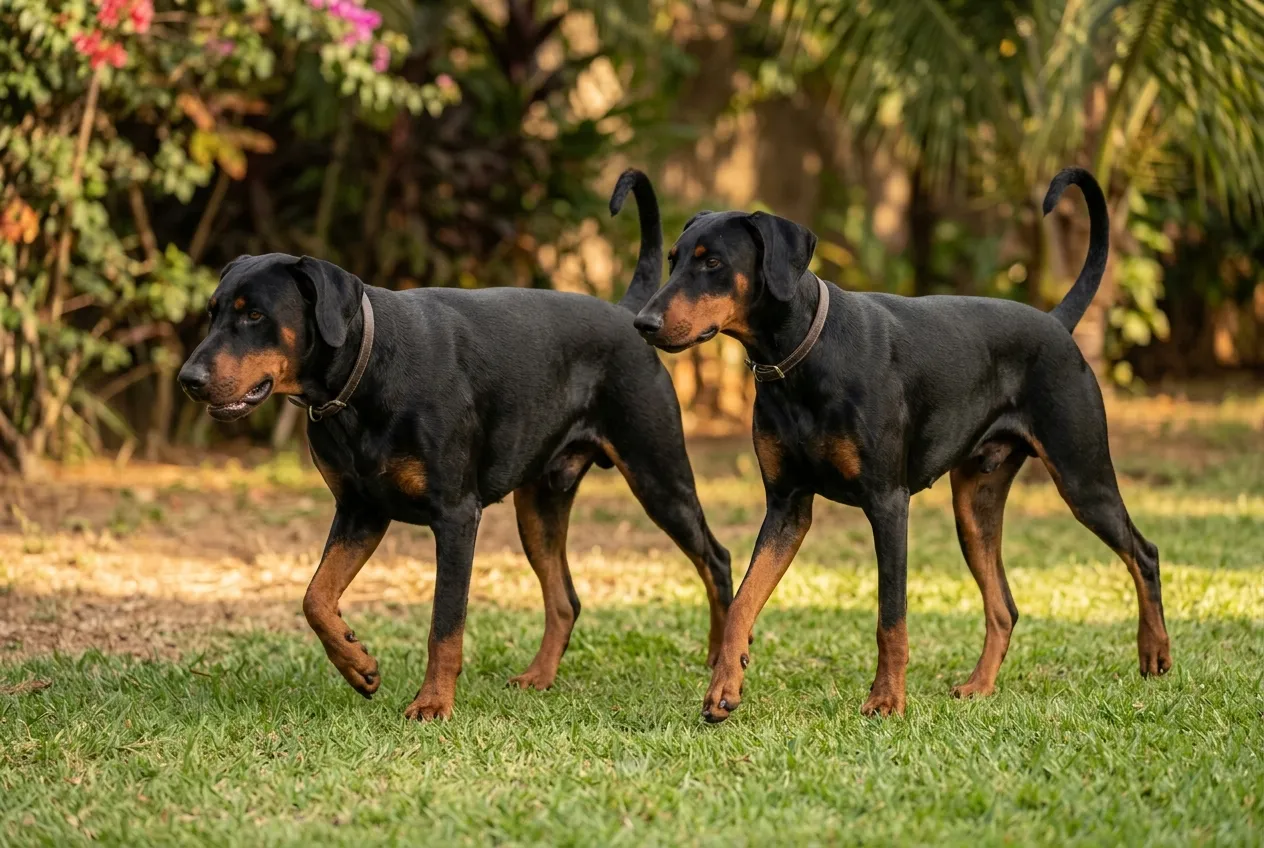
The second source is the breeding line. North American lines tend to present a lighter dog, more refined in silhouette; European ones, more bone and more volume of head. Both groups stay within the same height range of the standard, and the difference shows up in the impression the dog gives, more than on the tape measure. We compare the two in European or American Doberman.
What neither of these sources produces is a lap Doberman. A male below the standard's range is out of the standard, and the explanation usually lives in nutrition, worms, a difficult birth or malformation. None of that is a flag of exclusivity.
"But I wanted a smaller Doberman, now what?"
The honest answer: if your space or your routine calls for a small dog, the right path is to choose a truly small breed, and the Miniature Pinscher under its correct name is a legitimate candidate. What's not worth doing is paying an "exclusivity" price for a labeling error.
When the request for a "mini" comes from a fear about space, and not from a liking for small dogs, the subject changes, because what decides how a Doberman does in an apartment is energy expenditure and the routine of going out. Square meters weigh less than people imagine, and I wrote about what works and what doesn't in Doberman in an apartment.
How not to fall for a fantasy ad
- Ask for the pedigree and check the registered breed. A registry paper doesn't lie about the breed's name.
- See the puppy's parents, in person or by video call. The parents' size tells the whole story.
- Be suspicious of "rare". In serious breeding, rare tends to be a synonym for off-standard, and off-standard tends to take a toll on health.
- Get to know the kennel: address, structure, litter history. Whoever breeds properly makes a point of showing it.
- Ask for the parents' height and weight and compare with the table in this article. A "mini" seller freezes at that question, because the number gives away the breed.
If you want to understand how genetics defines what a Doberman can and can't be, the path is the guide to Doberman colors, which separates the recognized coats from the invented ones with the same yardstick as this article. And if the ad that caught your attention showed up on social media or in the classifieds, first read where to buy a Doberman safely.
The real Doberman is here
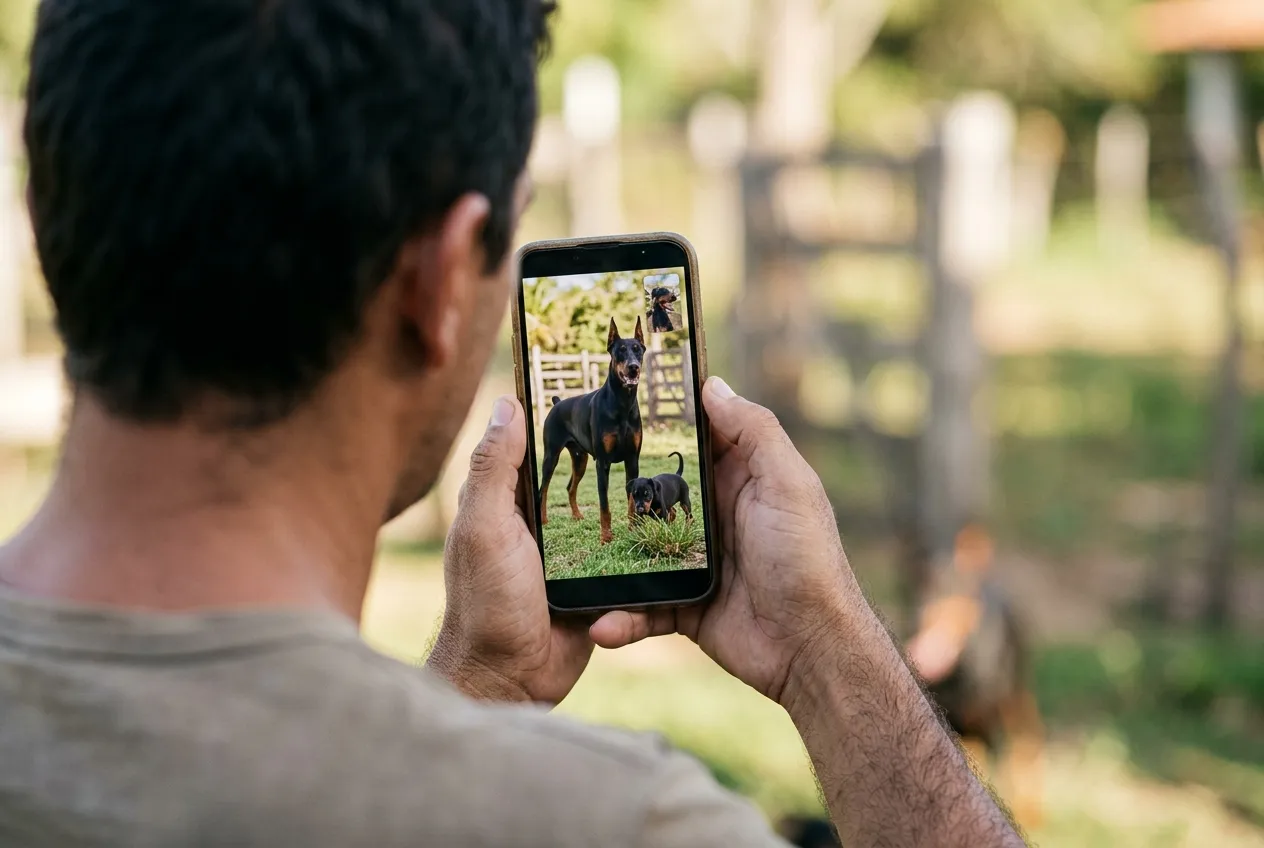
We breed within the standard, with lines of champions from the Americas and Europe and purity registered with the CBKC/FCI. Eros, the stud, comes from the lines of the Americas; Kira, the dam, brings European blood documented in the pedigree. The puppies are born in the whelping room and stay in a pen of their own, safe and with controllable temperature, with the mother free to come and go and nurse. They have natural ears and a full tail, and the follow-up continues after delivery. The genealogy of both is open in our genetics and family tree.
If you want to meet the available puppies and talk about which one fits your home, talk to us through the site. The WhatsApp button goes straight to the breeder.
About the author
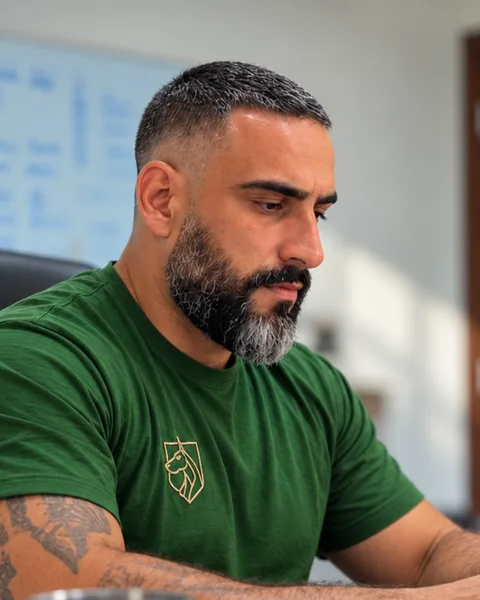
Marcelo Vaz
Entrepreneur and founder of Dobs Kennel
Marcelo Vaz is an entrepreneur and the founder of Dobs Kennel, a Doberman kennel in Nísia Floresta (RN), Brazil. As a boy, he already knew which dog he wanted. That passion for the Doberman stayed with him over the years and became the kennel he now runs with the seriousness of someone who waited a long time for it. “We are not veterinarians, but we study every subject in depth and only write what is backed by science and reliable sources,” he says.
- RegistryCBKC / FCI
- Kennel nameImperio Real Norte
- WhereNísia Floresta, RN
Keep reading


Comments
Ask the breeder directly. Every comment is moderated before it appears, and your email is never published.
Be the first to comment: ask the breeder directly.