
In this article
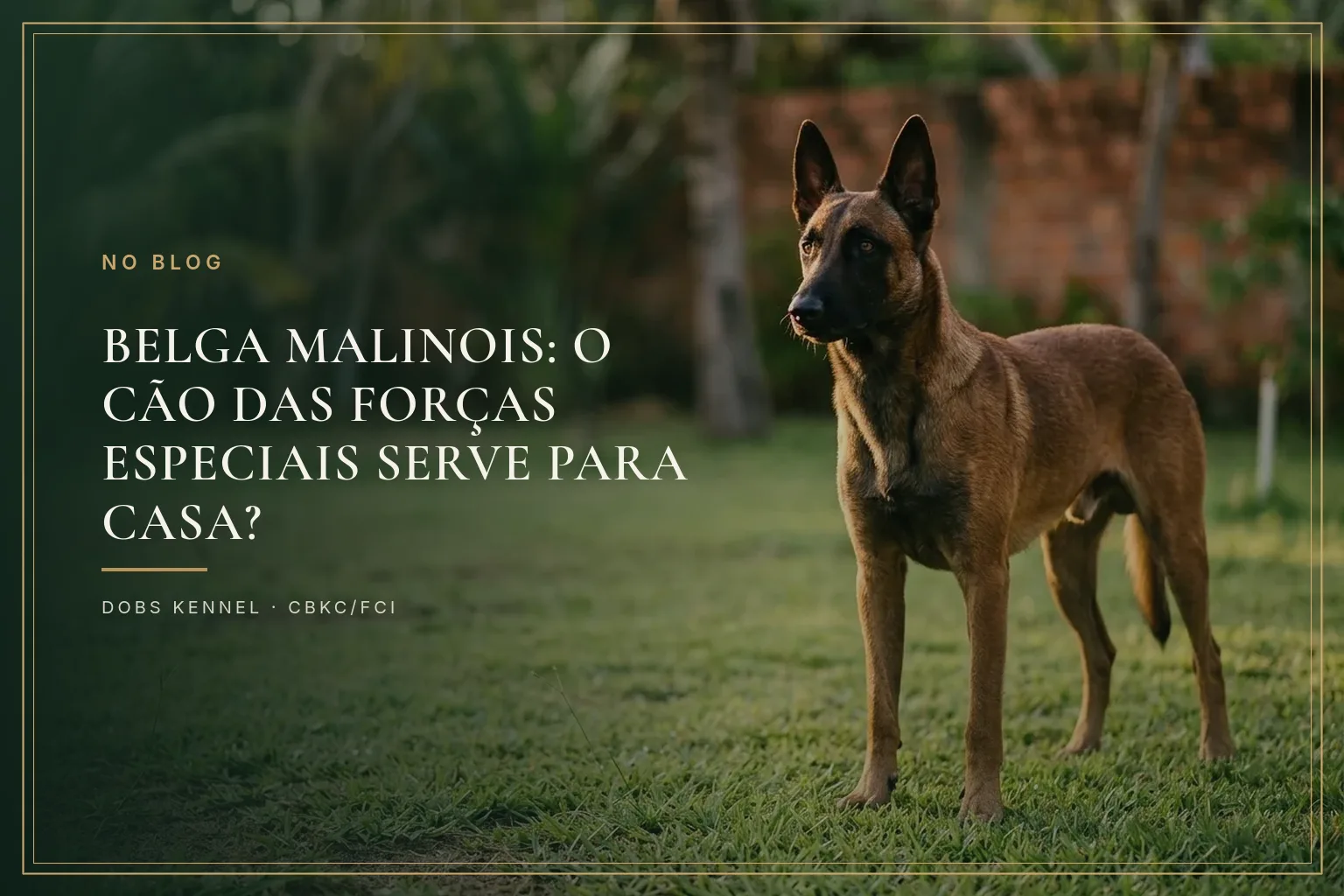
The Belgian Malinois is the most capable working dog alive today, and that is exactly why he doesn't belong in most homes. The sentence sounds contradictory and it's the most honest summary I can write. This guide explains what this dog really is, who he works for, and why the fame built on police operation videos is putting Malinois into families that had no way of keeping up with him.
I write as a Doberman breeder, a breed that competes with the Malinois for the attention of anyone shopping for a guard dog. I have a stake in the subject, and that's precisely why you'll find honest praise for the Malinois here, the kind his own kennels' videos rarely return in the other direction.
What the Malinois is, without the filter of the videos
The Malinois is one of the four varieties of the Belgian Shepherd, developed at the end of the 19th century in the region of Malines, in Belgium, for herding. The 20th century turned him into the favorite athlete of police and military forces the world over: lighter than the German Shepherd, faster, of hardier health, and with a willingness to work that never switches off.
That last part is what the videos don't show. The dog who scales walls and jumps out of helicopters does it because he was selected over generations for drive, the compulsion to have a task, at an extreme level. That engine doesn't come with an off switch. On an operation, he's the perfect tool. In an apartment, he's an elite athlete locked up waiting for duty, and when the duty doesn't come, he invents it: destruction, barking, chasing everything that moves, biting out of frustration.
The breed at a glance
| Trait | Male | Female |
|---|---|---|
| Height | 61 to 66 cm | 56 to 61 cm |
| Weight | 25 to 30 kg | 20 to 25 kg |
| Life expectancy | 12 to 14 years | |
| Energy | Extreme, the highest among the working dogs common in Brazil | |
| Need for a task | Daily and structured: sport, training or real work | |
| FCI group | Group 1, sheepdogs and cattledogs, standard no. 15 | |
Arraste a tabela para o lado para ver todas as colunas.
Malinois, Doberman and German Shepherd: the honest comparison
The three breeds turn up together in every guard dog search, and they are very different animals to live with. The full yardstick is in our comparison of the 7 guarding breeds; here is the slice that matters to anyone deciding among these three.
| Criterion | Malinois | Doberman | German Shepherd |
|---|---|---|---|
| Daily energy required | Extreme: 2h+ of structured work | High: 1h of real exercise | High: 1h plus a mental task |
| Bond with the family | Strong with the handler, a one owner dog | Glued to the whole family | Strong with the group |
| Tolerance for boredom | Almost none | Low | Low to medium |
| First time with a working dog | I don't recommend it | Possible with guidance | Possible with guidance |
| Ideal owner profile | Dog sport competitor, trainer | An active family that's around | A family with a routine and a task |
Arraste a tabela para o lado para ver todas as colunas.
About the Doberman at that table, I wrote in detail in the temperament guide and in the article about the lineage we breed. About the German Shepherd, the complete guide does the same exercise in frankness.
Who the Malinois is the right dog for
There is a right owner for this dog, and he has a well defined profile:
He competes in dog sport, IGP, mondioring, competitive agility, detection. The Malinois doesn't want a walk; he wants to work. Sport is his civilian job.
He has hours a day, every day. This isn't the dog of the active weekend. He's the dog of an athlete's routine, with planned training, managed rest and a crate as a tool for pausing.
He has handled a working dog before. The Malinois reads hesitation in his handler faster than any breed I know, and he fills the vacuum of leadership with decisions of his own, usually bad ones.
If you recognized yourself in all three paragraphs, the Malinois will give you the best partnership of your life. If you recognized one or none of them, keep reading.
Who he's the wrong choice for, said with respect
A family with small children looking for guarding and company: the herding instinct of the Malinois includes nipping the heel of a running child, and his energy flattens any household routine. The right list for that scenario is in the article about the best guard dog for a family with children.
Anyone who wants guarding by presence with sofa companionship: the Malinois does guard, but his daily price is far too high for someone who only needed the alert and the imposing figure. The Doberman, the Boxer and the German Shepherd deliver that for a fraction of the energy bill.
Anyone who fell in love with the videos: the skill you saw is the result of a thousand hours of professional training on top of extreme genetics. Buying the dog doesn't buy the result, it buys the obligation to produce it.
If it's him anyway: how to choose
The checklist for a serious kennel is the same for any breed, and it's in our guide on how to recognize a serious breeder: parents you can see, hip dysplasia screening, a contract, a breeder who asks about your routine before talking about price. With the Malinois, add one more question: "is this litter from a working line or a companion line?". The working lines carry even more engine, and an honest breeder tells you that in the first conversation.
Frequently asked questions
Is the Malinois fiercer than the Doberman?
It isn't a matter of fierceness: it's a matter of energy and of decision making. The Malinois has more bite drive from sport selection; the Doberman has more social reading of the house. Neither of them is "fierce" when raised properly, and the article "Is the Doberman fierce?" takes that yardstick apart.
Does the Malinois suit an apartment?
With a sporting owner who trains every day, he survives it. Without that, it's the worst possible scenario: the highest energy dog on the market in the smallest space available.
How much does a Malinois cost in Brazil?
From a serious kennel with a pedigree, the range usually starts at a few thousand reais, varying a great deal between companion and working lines. Be suspicious of the extremes: cheap turns out expensive in any working breed, and the reasoning in our article about the price of a Doberman applies in full here.
Does the Malinois live well with other animals?
With early socialization and supervision, yes, but the chase drive is high, and a running cat trips the instinct. It's management for life, not a problem that time solves.
What is the difference between the Malinois and the German Shepherd?
The Malinois is lighter, faster, of hardier health and considerably higher energy. The German Shepherd is steadier in domestic life and more tolerant of a family's pace. For a home, the German Shepherd suits more people; for high level sport, the Malinois dominates.
Still torn between a Malinois and a guard dog you can actually live with? Get in touch. If your situation calls for the Belgian, I'll tell you so, and I'll also tell you what your routine needs to have in place before you go looking for him.

Written by
Marcelo Vaz — breeder at Dobs Kennel
CBKC/FCI registered kennel in Natal, Brazil. Champion American and European bloodlines, proven health, and lifelong support for every family. Meet the kennel →